
Saving Zinnia Seeds (part 2)
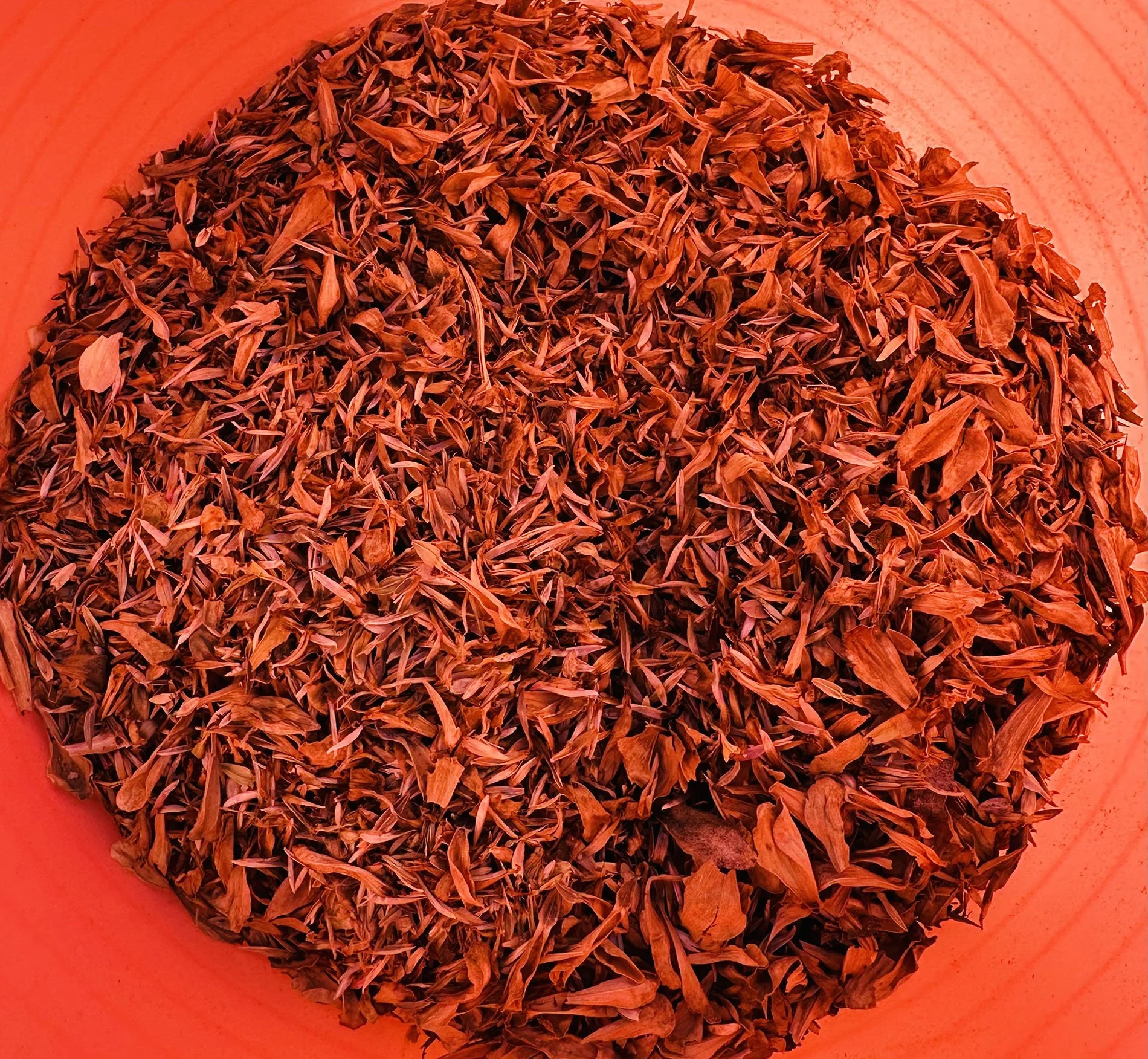
Zinnia Seeds and Chaff
In part one we left off with the flower heads drying in a cool place on breathable fabric. I set up a couple of extra tables in the potting shed and used my frost freeze blanket as the breathable cloth. You only need to let them dry for a couple of weeks, but as time often gets away from me, I left my seeds to dry for about a month.
Part two of the seed saving process involves threshing, winnowing and storing the seeds. Unlike part one, this stage is a bit labor intensive. Threshing involves taking the seeds off the flower cone with your fingers. You want to avoid damaging the cone which is the center of the flower because it can be hard to separate the pieces later.
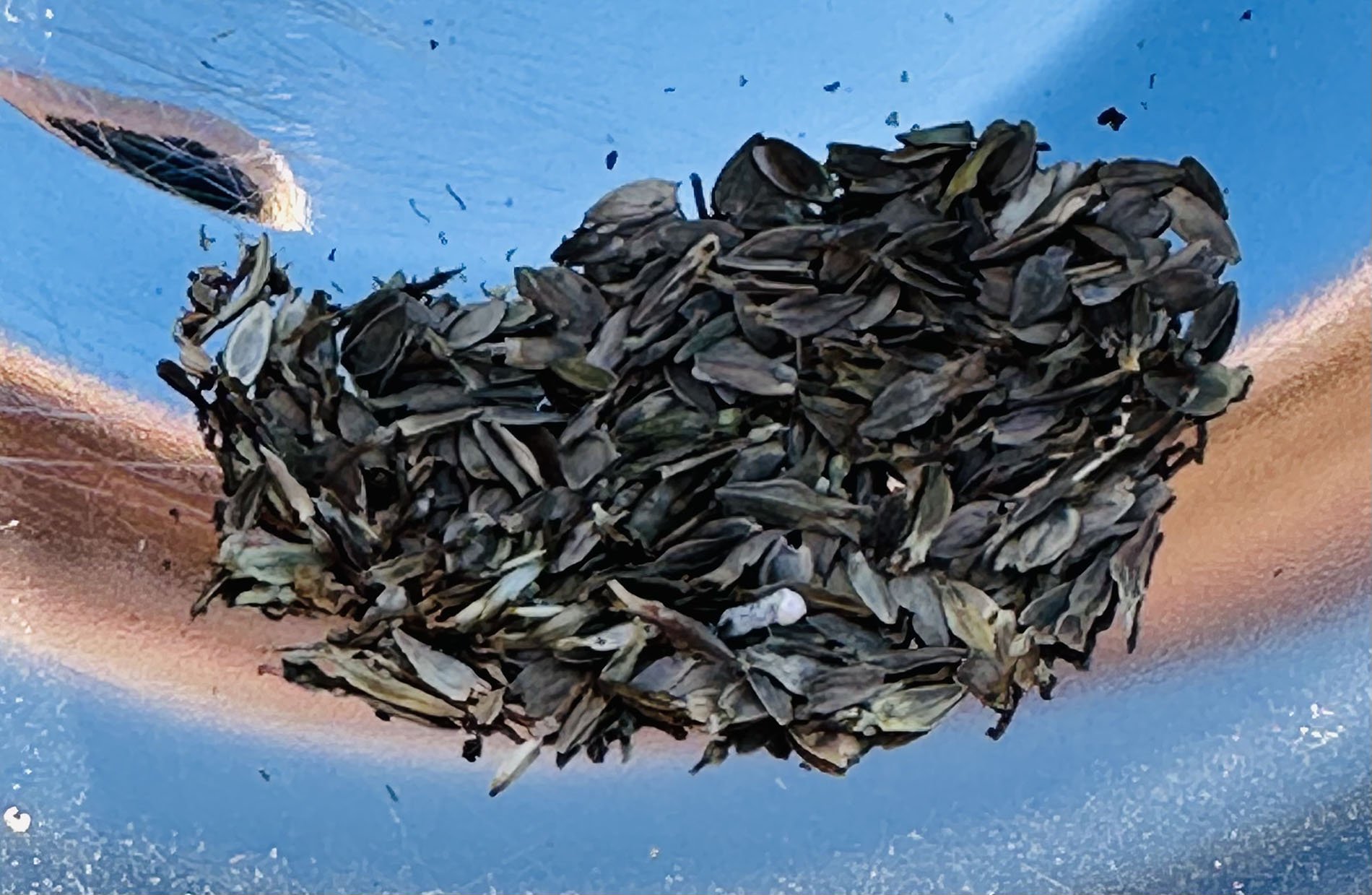
Zinnia Seeds
I used a large plastic bucket to thresh my seeds as I needed to come back the next day to complete the winnowing. I discovered this step took the most time. Zinnias create a lot of chaff (flower petals, stems, dust and dirt) during the threshing process. These extra bits and bobs need to be separated, aka cleaned, from the seeds. To do this I took a handful of the seeds and chaff and placed it in a metal mixing bowl. As I swirled the mixture in the bowl, I lightly blew. The chaff which is lighter in weight than the seeds flew out while the seeds remained in the bowl! You must do this several times to remove all the unwanted dirt, etc... Because I had a lot of flower heads, it took me a few days to complete the winnowing. This process is also very messy, as noted by Erin from Floret, so do this outside!
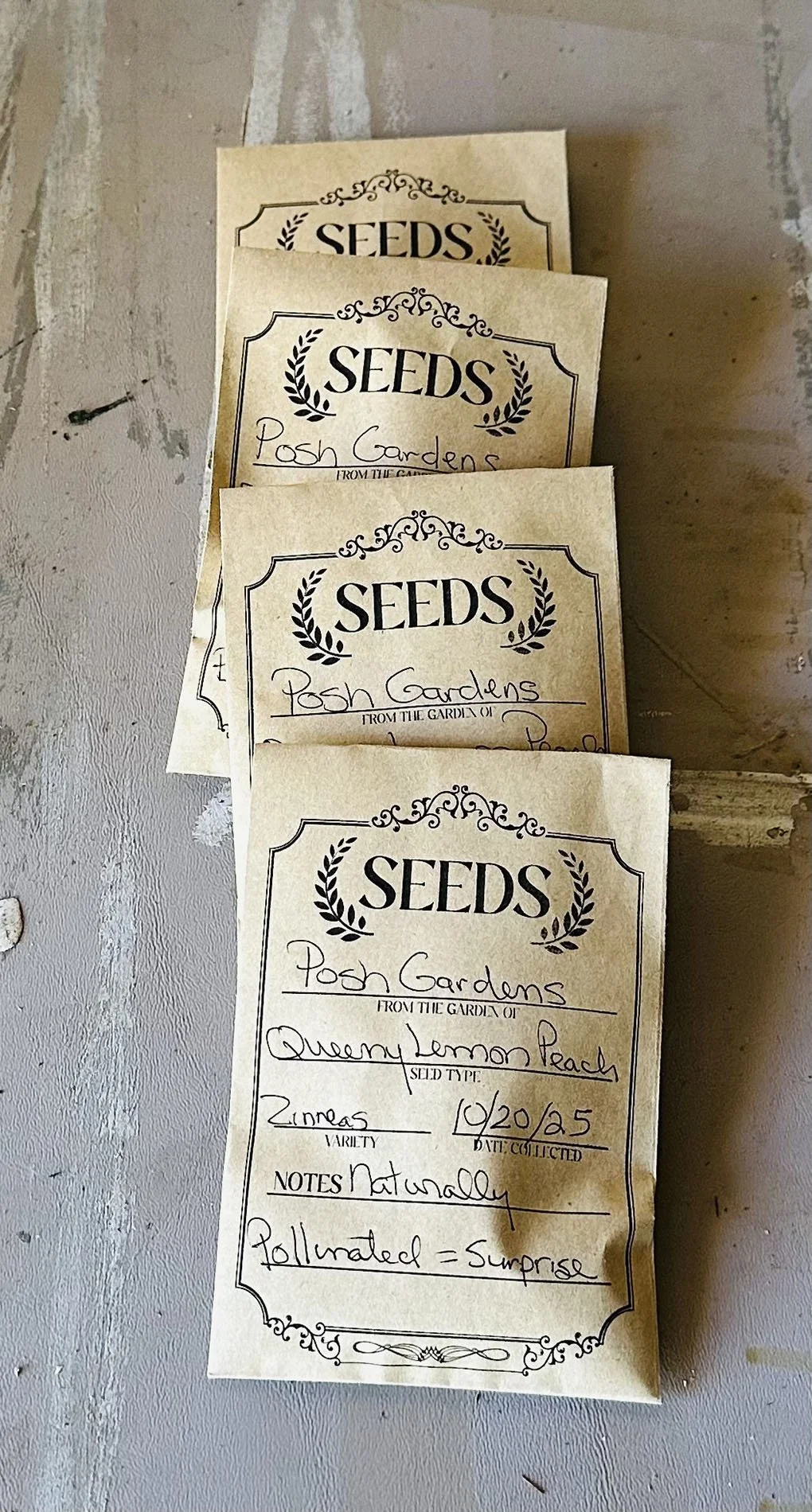
With my seeds cleaned, the next step was to store them. Erin recommends storing them in some type of breathable medium such as a paper envelope or cloth bag. I had ordered some cool looking envelops designed for seed storage on Amazon a few months before. With each winnowing, I’d bag the seeds, label and date them. I also add a note that stated they were naturally pollinated which means they will most likely not be the pure variety that I started with as the bees often carry pollen from one flower to the next. Basically, when I plant these seeds next spring, what comes up will be a surprise!
So, there you have it, that is how you save Zinnia seeds. Once I finish with these flowers, my plan is to take this same approach to saving my Queen Ann’s Lace, Snap Dragon, asparagus and cilantro seeds! After that, I might continue this process with all the seeds my mom set aside for me that are all still on the flower head or mixed in with the chaff. It might take me a few months to complete the whole endeavor but in the end, I should have a good collection of seeds for planting next spring!
