
Save East Orchard Mesa
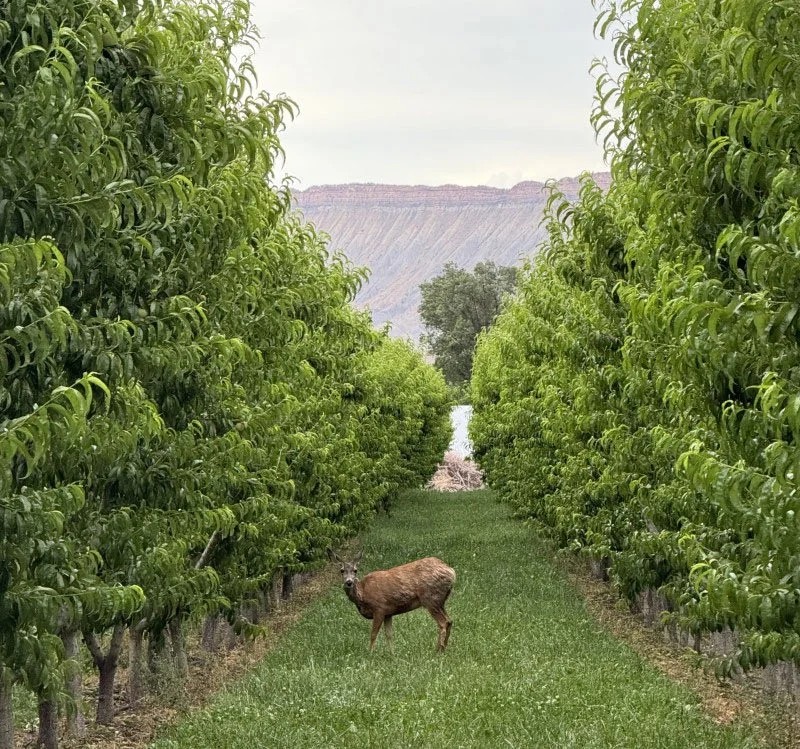
East Orchard Mesa
We like to call it “The Shangri La of Colorado’s Western Slope.” Palisade Posh is located on East Orchard Mesa. What makes our location so special is we are nestled among our famous fruit orchards and nationally renowned vineyards. The main road in is referred to as the Fruit and Wine byway and it gently winds through the rolling hills of East Orchard Mesa. Our property is just off the main byway. During the summer months we share the road with both farm equipment and visiting cyclists. Its agricultural landscape is rural America at its finest!
So, you can imagine the surprise and horror, when our East Orchard “Village” raised the alarm regarding an upcoming county hearing about a request to change the zoning of an 87-acre parcel of farmland located at 32 and C road in East Orchard Mesa! A developer out of Aspen Colorado is requesting the zoning to be changed from agricultural land to a mixed-use commercial zone so they can build a multi-unit housing development. This parcel of land is in the middle of the Mesa’s agricultural corridor and if approved could have a major negative effect on the whole of East Orchard Mesa. The current ‘master plan’ that Mesa County is the steward of limits subdividing the land to between 5-10 acres and only allows one additional ADU per property plus the main home. This plan was created to protect and preserve the agricultural landscape in Palisade and the surrounding areas like East Orchard Mesa.
Just as when I sent the distress call (text) regarding Andy and his stroke, our ‘Village’ sprang into action when a text went out about the situation. The word spread like wildfire, not surprising many of our fellow farmers didn’t know anything about the county hearing or the developer in question. As they are a large company, Andy researched them, this didn’t surprise me in the least… I think that was their intension all along… if no one (those of us living on East Orchard Mesa) knew about the requested zoning change then there would be no one to oppose the change! However… the word spread fast, letters have and are being written, county commissioners and board members are being contacted as are local representatives. The Village has even reached out to Governor Polis’ office!
As I write this blog post, the hearing has not yet occurred. The key issue is the fact that if the zoning commission grants this request, it sets a precedent that could adversely impact all agricultural land in the future. It opens the door for more developers to come in and do land grabs, buying land from landowners or their family members who are no longer interested in farming their property. Folks who see an opportunity to make an easy or quick buck regardless of the impact it might have on their neighbors or the future of East Orchard Mesa as a whole. An outside developer who has zero connection and or appreciation of Palisade and all that it represents is trying to change zoning that protects agricultural land so they can get rich. Urban sprawl is trying to infiltrate Palisade and East Orchard Mesa and once it gets its hands on farmland there is no going back! Having lived in Denver for 20+ years I have seen it happen firsthand! Overdevelopment destroys the landscape, the air and puts major stress on water resources; the latter being something we in Colorado are painfully aware of as annual drought conditions and snow run-off from the Colorado Rockies continues decreases annually.
I’m surprised that the Mesa County commissioners are even willing to entertain the idea of this zoning change as they were the ones who helped craft the ‘master plan’ and as such know, or should know, the importance and value of protecting the agricultural lands in the Valley. Driving through Grand Junction, there are so many other revitalization opportunities to build multi-unit developments that would help beautify and gentrify the rougher areas of the city! If developers where to take up the gauntlet and help revitalize the City of Grand Junction they could make a serious positive contribution to the Grand Valley. Why not fix what is broken rather than break or in the case of East Orchard Mesa destroy what is not broken!
So, Palisade Posh blog readers if you are interested in helping me and my ‘Village’ save East Orchard Mesa I’ve include some details and contact information below:
Opposition to Master Plan Amendment (PRO2025-0119)
Parcel: 2943-262-111
Sarah Caskie, CFM
Senior Planner
Mesa County
970-255-5036
For those of us who live in this area, this is not a small planning adjustment. It is a significant change that would shift land planned for rural use into a designation that allows urban-scale density. That kind of redesignation does not just affect one parcel. It changes expectations for the surrounding area and puts long-term pressure on neighboring rural and agricultural properties.
East Orchard Mesa is valuable because it is still defined by working land, irrigation, open space, wildlife, and the realities of rural life. People who live here accept dust, ditch maintenance, slow-moving equipment, seasonal activity, and the inconveniences that come with an agricultural setting because that is exactly what makes this area worth living in and protecting.
Our concern is not simply growth; it is incompatible growth in the wrong place. Once productive irrigated land is redesignated for much higher density, it sends a message that surrounding rural land is no longer something to preserve, but something to transition. That threatens the rural character of East Orchard Mesa and undermines the agricultural compatibility that existing residents, growers, and landowners depend on. These kinds of changes do not happen in isolation. They create precedent, speculation, and ongoing pressure for further conversion.
This area is part of a larger agricultural system. It depends on irrigation infrastructure, compatible neighboring land uses, and a county planning approach that recognizes the value of keeping productive land in rural and agricultural use where possible. East Orchard Mesa should not be treated as a blank space for future density simply because it has not yet been built out.
We ask that you consider not only the immediate application, but the long-term consequences of approving it. Decisions like this shape the future of entire communities. Once rural character and agricultural continuity are lost, they are not easily restored.
Relevant facts: Mesa County ranked #1 in Colorado for fruit, tree nut, and berry sales in 2022 at $30.0 million and reported 54,238 irrigated acres. CSU reports that about 85% of Colorado’s wine grape acreage is in Mesa and Delta Counties, producing about 95% of the state’s grapes on average. A 2023 survey found Mesa County alone accounted for 97.9% of Colorado grape production. Colorado’s wine industry generates $5.72 billion in economic activity, supports 30,878 jobs, and drives 545,800 tourist visits and $104.23 million in annual tourism spending. OMID serves 9,219 acres through roughly 40 miles of canals.
“We respectfully request that the Planning Commission deny PRO2025-0119.”
Contributing writers to this blog post:
Kim Putnam
Jeanette Sanders
Photo by:
Laurie Merrick
Postscript: The courtroom was packed, every seat was filled with additional people standing alone the back wall, and filling not one but both doorways into the room. In her opening comments Sarah Caskie, the Senior Planner for the County stated she had recieved 71 letters from the community requesting the Planning Commission deny PRO2025-0119. It was an emotionally intense hearing with many, many people from the community speaking out against the request to rezone. With full gratitude, I’m please to report that the Mesa County commisioners held the line and voted to deny the request! East Orchard Mesa and all it represents for the agricultural community in the Grand Valley and Colorado as a whole remains protected! This beautiful argicultural land will continue to thrive and live another day…. at least until the next rezoning request is made and again after what I saw last night I know our community to will come together and speak up as one voice to protect that incredible resource we call home.
