Foraging
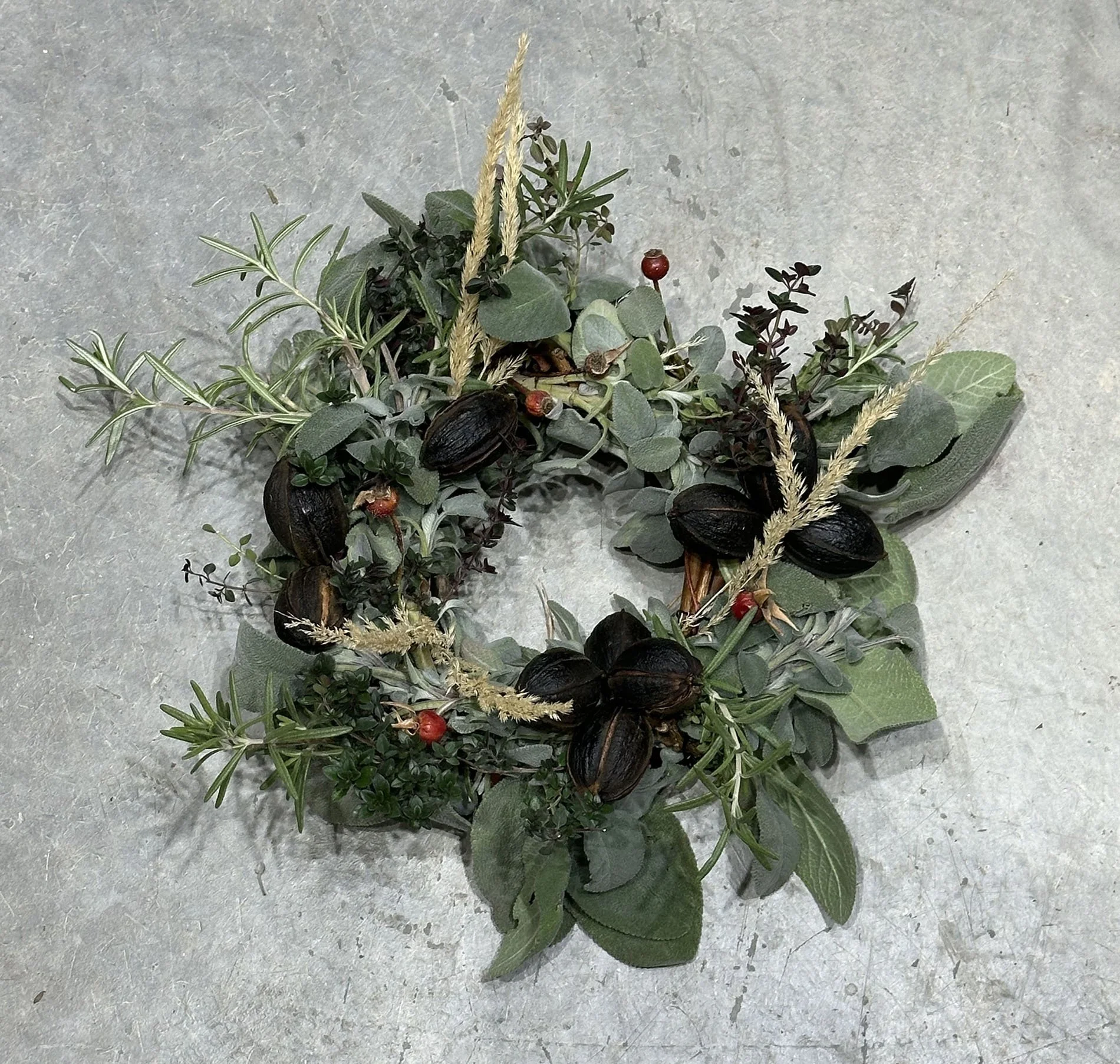
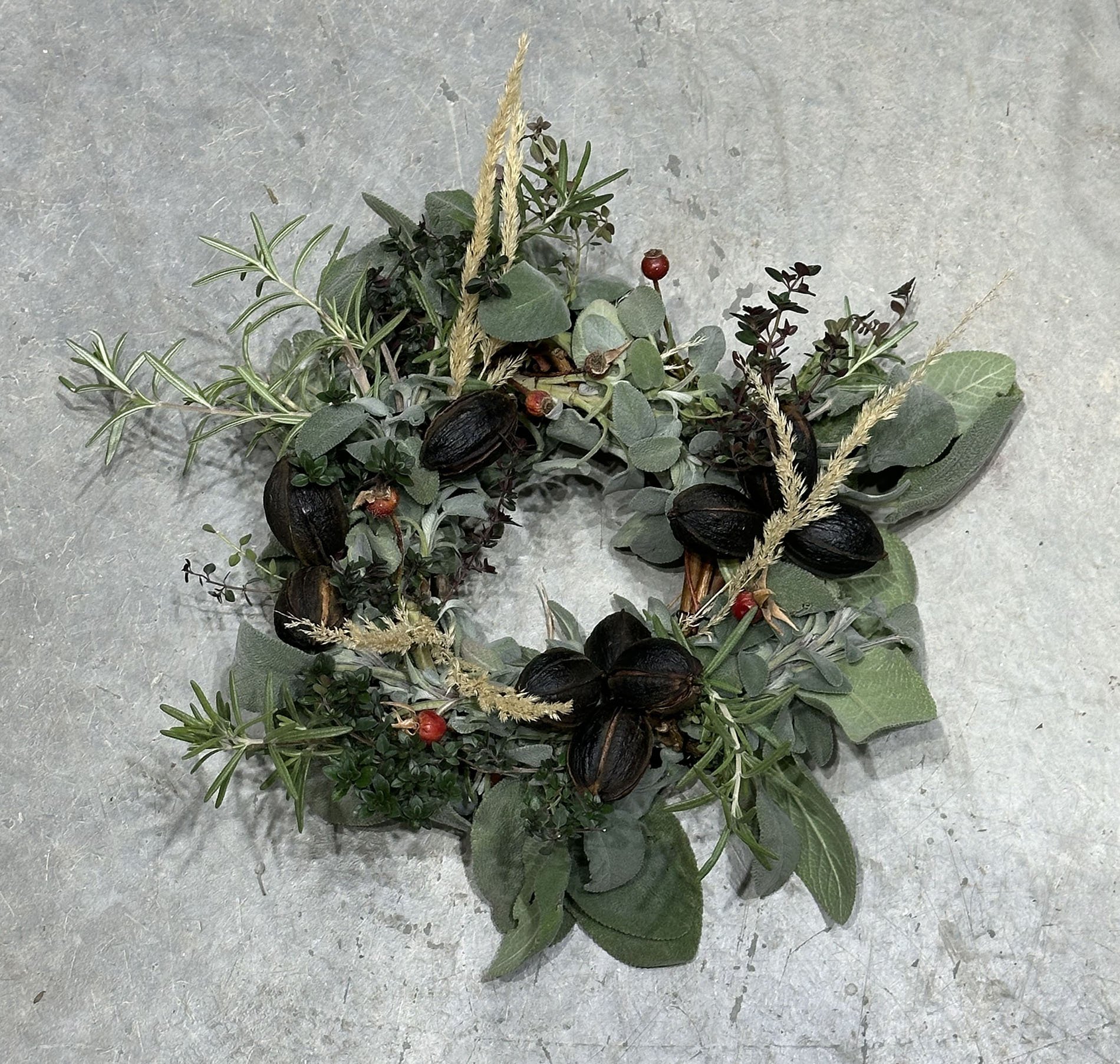
Wreath Made from Foraged greenery from the Farm
The French-American Artist, Louise Bourgeois is quoted as saying “… art is not about art it is about life…” This creative philosophy resonates with me as I redefine my creative practice. Rather than redefine, perhaps what I am doing is expanding my creative practice to include work and materials that are considered outside the category of ‘fine art’; this includes my deep dive into floral arranging and more recently wreath making.
“Art is about life…” since moving to Palisade, I’ve spent a great deal of time building out our garden. This endeavor has also influenced what I create in my art studio. My artistic focus has shifted from exploring objectification of the female form to nature. Over the last two years, I’ve painted the environment around me, the sky and the land usually in oil paint. Since the start of this year, I’ve branched out to experimenting with watercolor and ink painting the flowers and plants I’ve grown and even the Pecan nuts that fall from the trees that surround the main house.
During the summer I spent time creating floral arrangements, I mean who doesn’t love fresh flowers after all! And in November I even took a wreath making workshop at a local winery. It’s been great fun working with these new materials while applying all that I know about the elements and principles of art and design. It turns out, that arranging flowers and creating wreaths are not all that different from creating a composition for a painting.
My most recent endeavor in wreath making took me on a new adventure into the world of ‘foraging’! I decided to take the knowledge that I learned in the workshop and see what I could come up with on my own. Using materials from our property and the surrounding landscape. I started by harvesting willow from my neighbor’s property. She considers the willow as weeds and desperately wants to get rid of them. I see them as material to create beautiful and functional things. The base for the wreath I created in the workshop was made of grapevines, however I was curious to see what I could do with willow reeds.
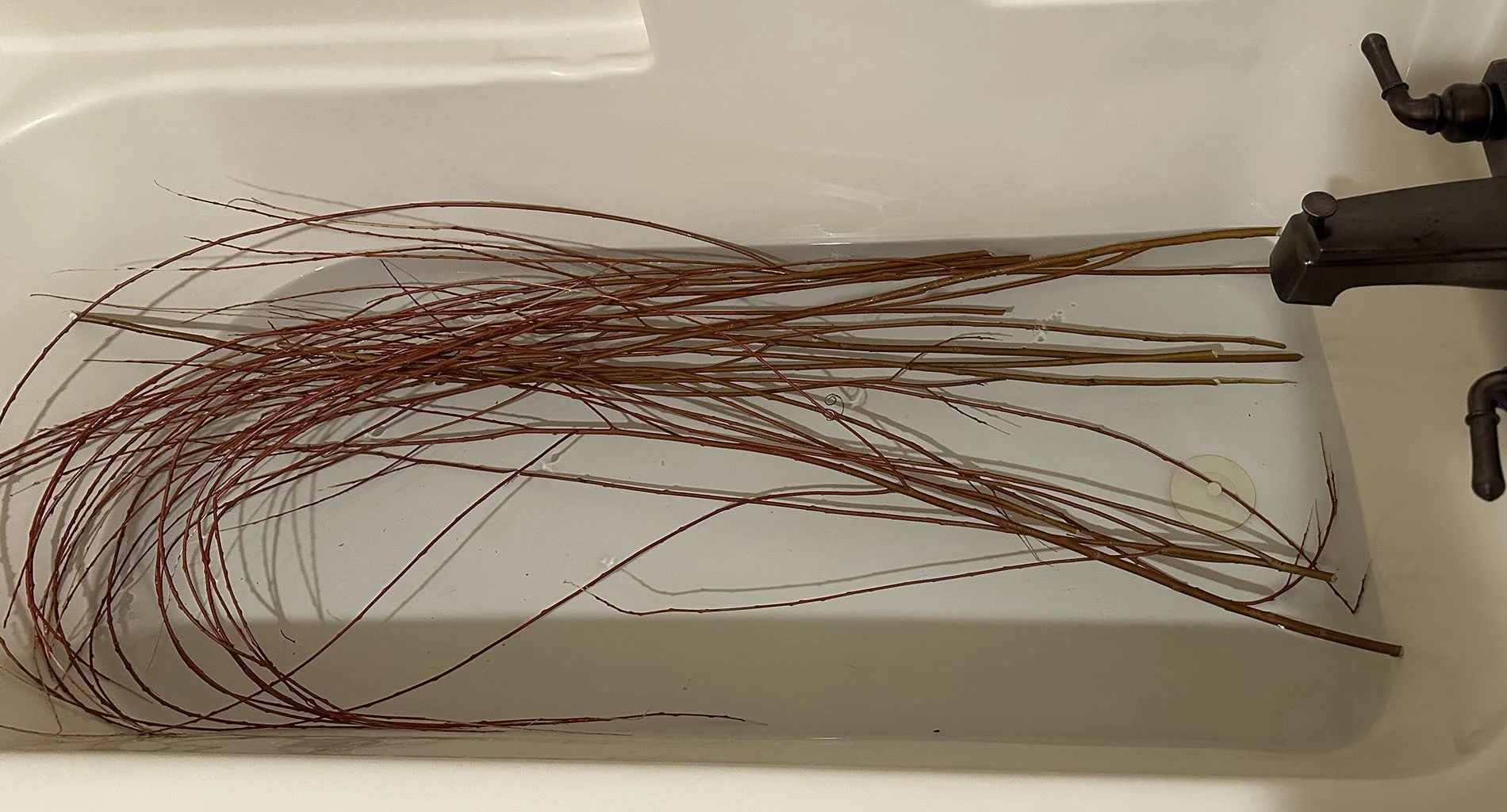
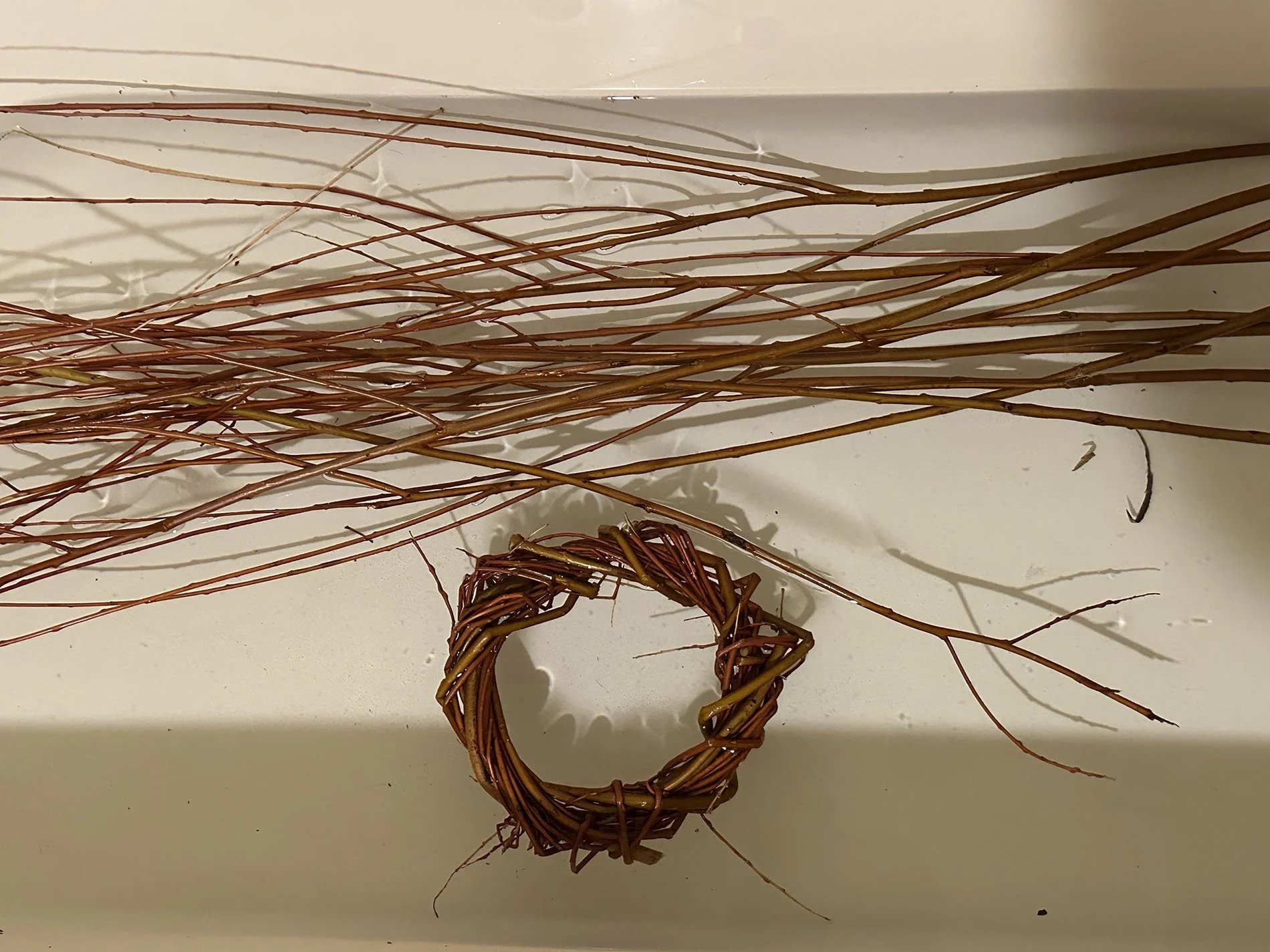
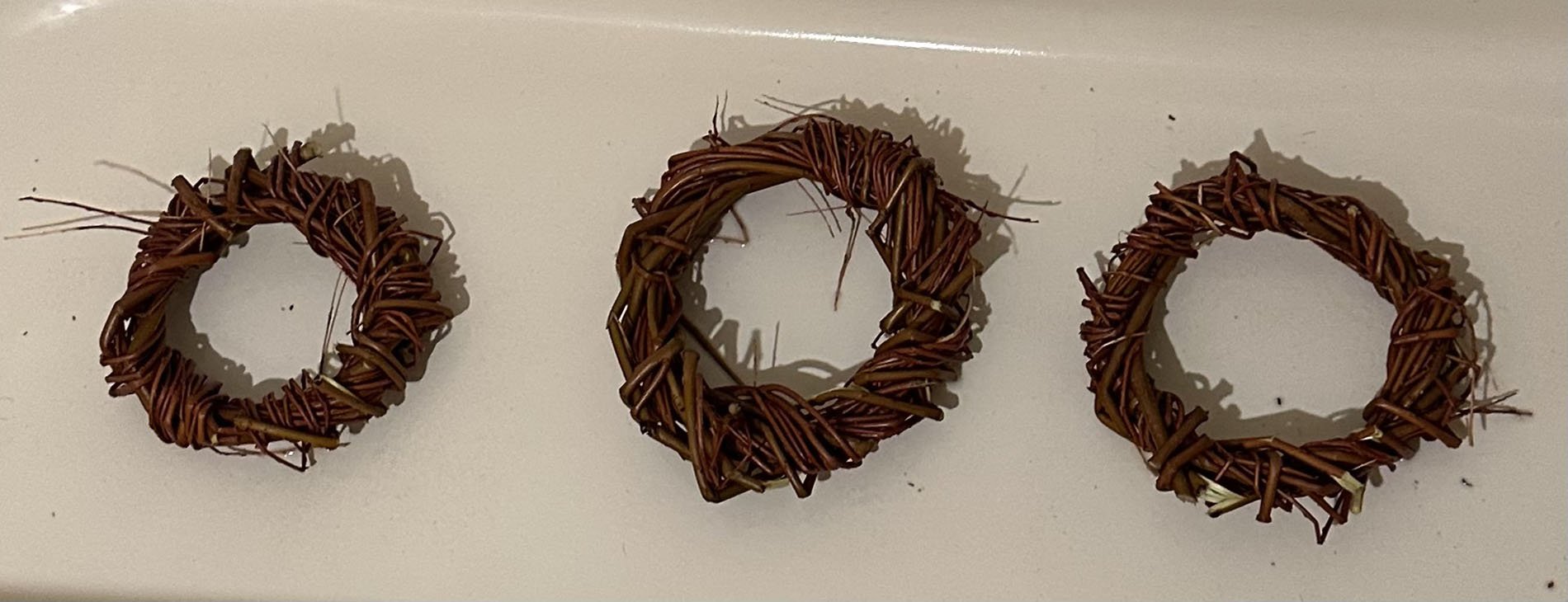
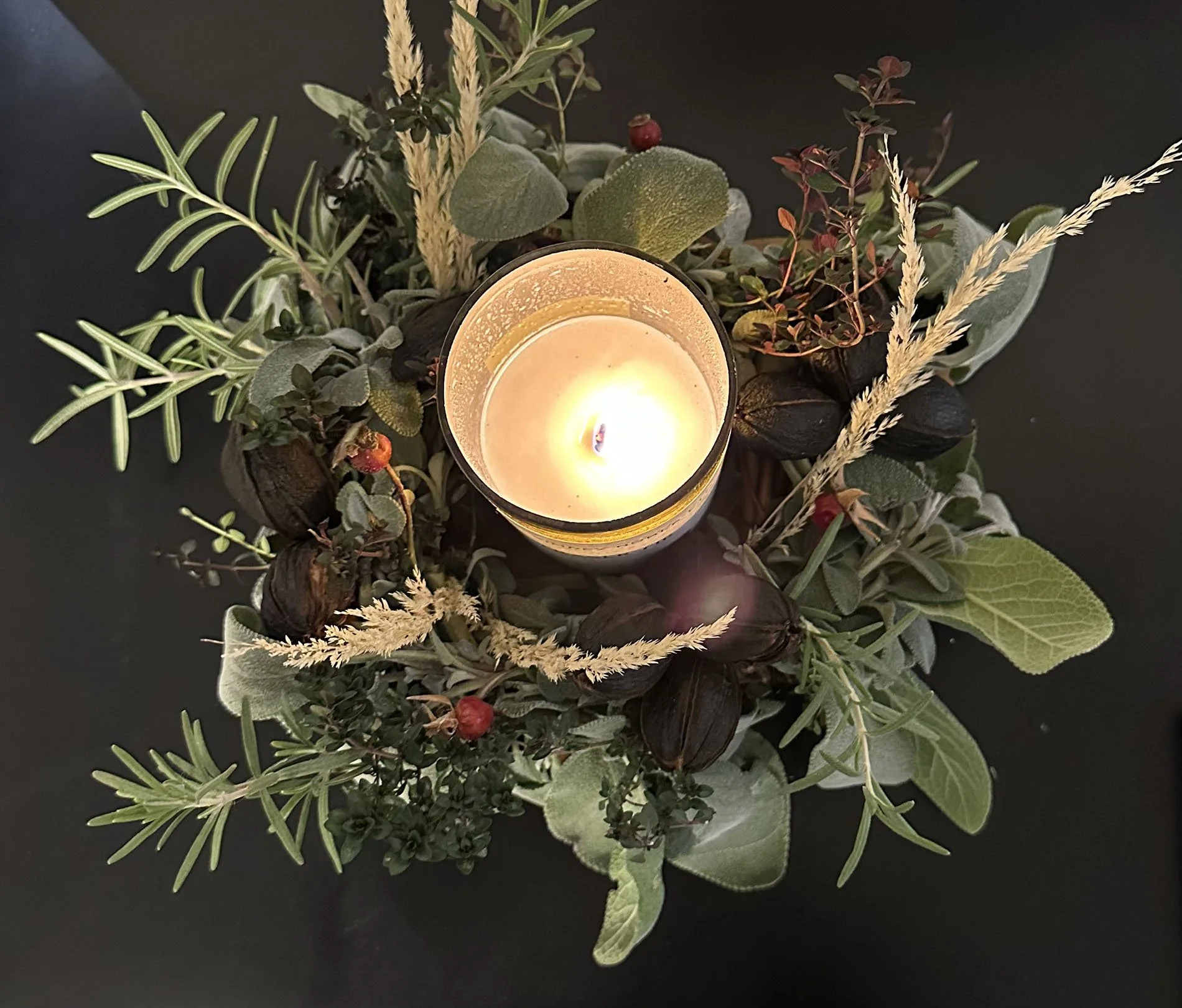
I asked my neighbor if I could harvest some of her willow. She was over the moon at the request and even helped me cut some! For the wreath project I focused on the smaller, living willow reeds and clipped several bundles. I soaked the willow in our bathtub for 24 hours. I did this to ensure they would be pliable when it came time to form the wreath. To create the circular form, I started with willow that had several branches in one and twisted them into a circle. Next, I took a single willow and wound it around the two ends of the first branch to secure the circular shape. I wrapped each new willow branch around this form, weaving and winding the branches around each other and tucking the ends within the form. Once I had the shape to a pleasing width, I started on a new one. In the end I was able to create three small wreath forms. My goal was to create a decorative wreath made from material from our farm that would encircle a candle I bought from our friends who own Simply Noble, a local boutique that creates hand crafted candles, soap and lotions using all natural materials.
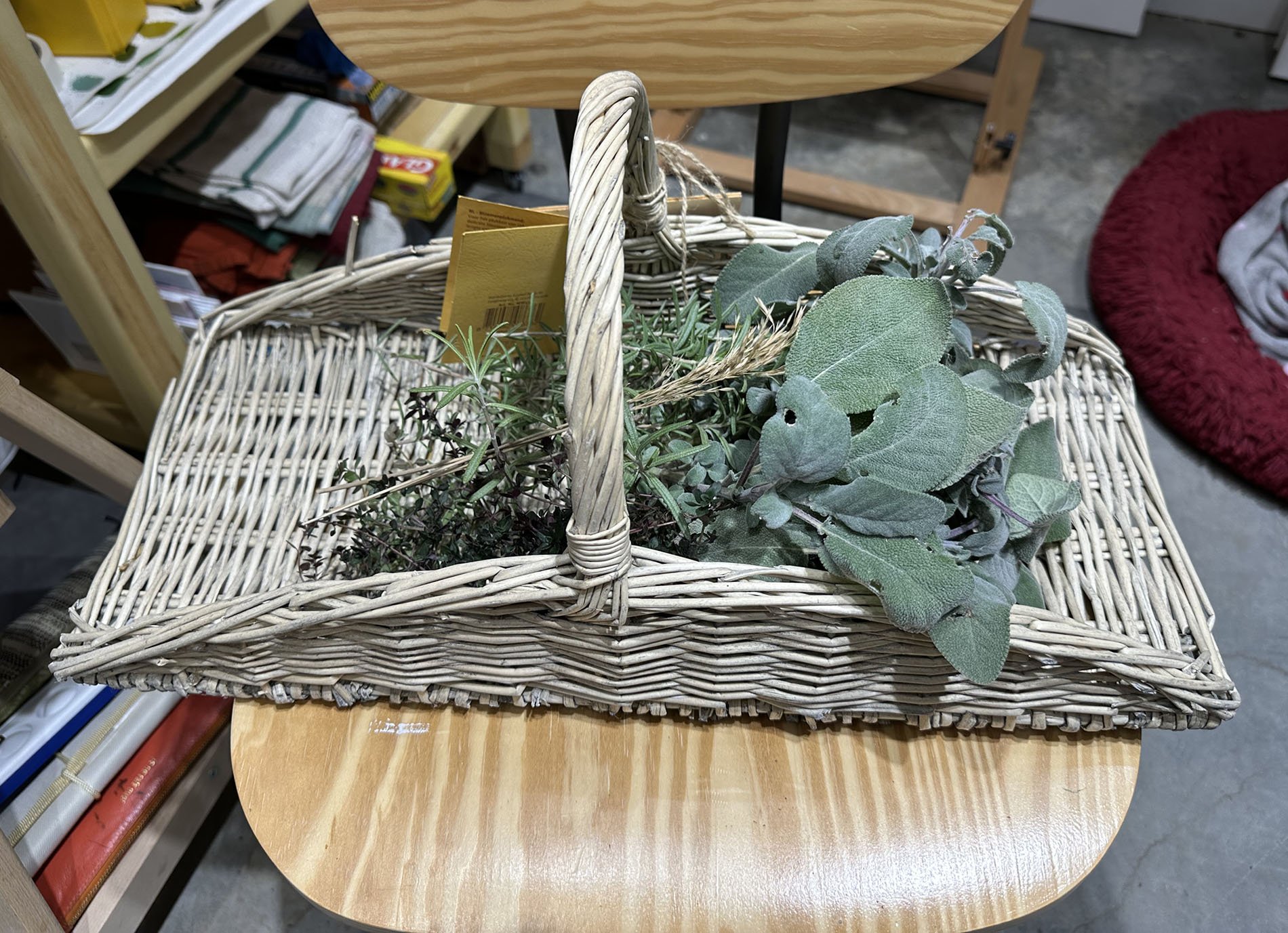
Once all three forms were made, I drained the water and let them dry for a few days and used that time to contemplate what greenery I wanted to use to create the exterior of the wreath. This proved a bit challenging because its winter and what was green has now died back. That said, my herb garden was still producing, and our Pecan trees are giving us nuts daily. Both inspired me to do a little walk-about on our property, I foraged Sage, Thyme and Rosemary from the herb garden, clipped a few Pecan branches that had nuts still in the husk and some starting to peak out. I also gathered a few small Rose Hips from my rose bushes; these would give the wreath a wee pop of color. I also found some ornamental grasses on the side of our house and took some clipping of those to add another element of color as well as texture. With my foliage gathered it was time to create.
I purchased black florist wire in a variety of gages on amazon the week before and used it to attach the greenery to the willow base. As I was creating, I will admit I was a little worried I’d not be able to pull off another beautiful wreath like the one I made in the workshop. Silly me… I put that fear aside and just continued to work using the knowledge I gained from the workshop and combining with what I already knew about making art. I filled in empty spaces, tucked a bit of texture here and there, added pops of color and shape to create visual variety and focused on enjoying what I was making. In the end, I not only had a beautiful wreath but one that smelled divine!
As I twisted, tucked and wove the foliage, I thought about additional plants I should add to my garden, including Roses that were known for producing Rose Hips, and different ornamental grasses. I’m also going to research vines that keep their color during the winter months as well as different types of evergreens. I like the idea of foraging from the garden all year round and creating different wreaths depending on the season.
Not only do I see this as an opportunity to create a series of artwork, I did a watercolor of the first wreath I made and am turning it into a set of cards; but I also see this as an opportunity to offer my own workshop on wreath making. I have the teaching skills and I love sharing knowledge. Foraging was a fun adventure, and I think that would help set my workshops apart from others. It would be unique to Palisade Posh as we would be gathering our supplies from the farm. This process could then inspire others to do the same on their own property or around their local environment. I think the opportunity to forage can be done anywhere, legally of course, and the possibilities for materials are endless, all you need is a bit of imagination!
Postscript: My friends who make the beautiful candles, pointed out that combining the mini wreaths with candles could be a fire hazard once the wreaths dry out. A very good point I must say, although the candles are encased in glass there is always a possibility. I came up with two solutions to this potential problem. One, rather than real candles use fake ones, i.e. little battery powered votives or column candles; or two, submerge the real candle in water thus keeping the glass encasement cool and putting a fire-resistant barrier around the real candle.