
Composting 3.0
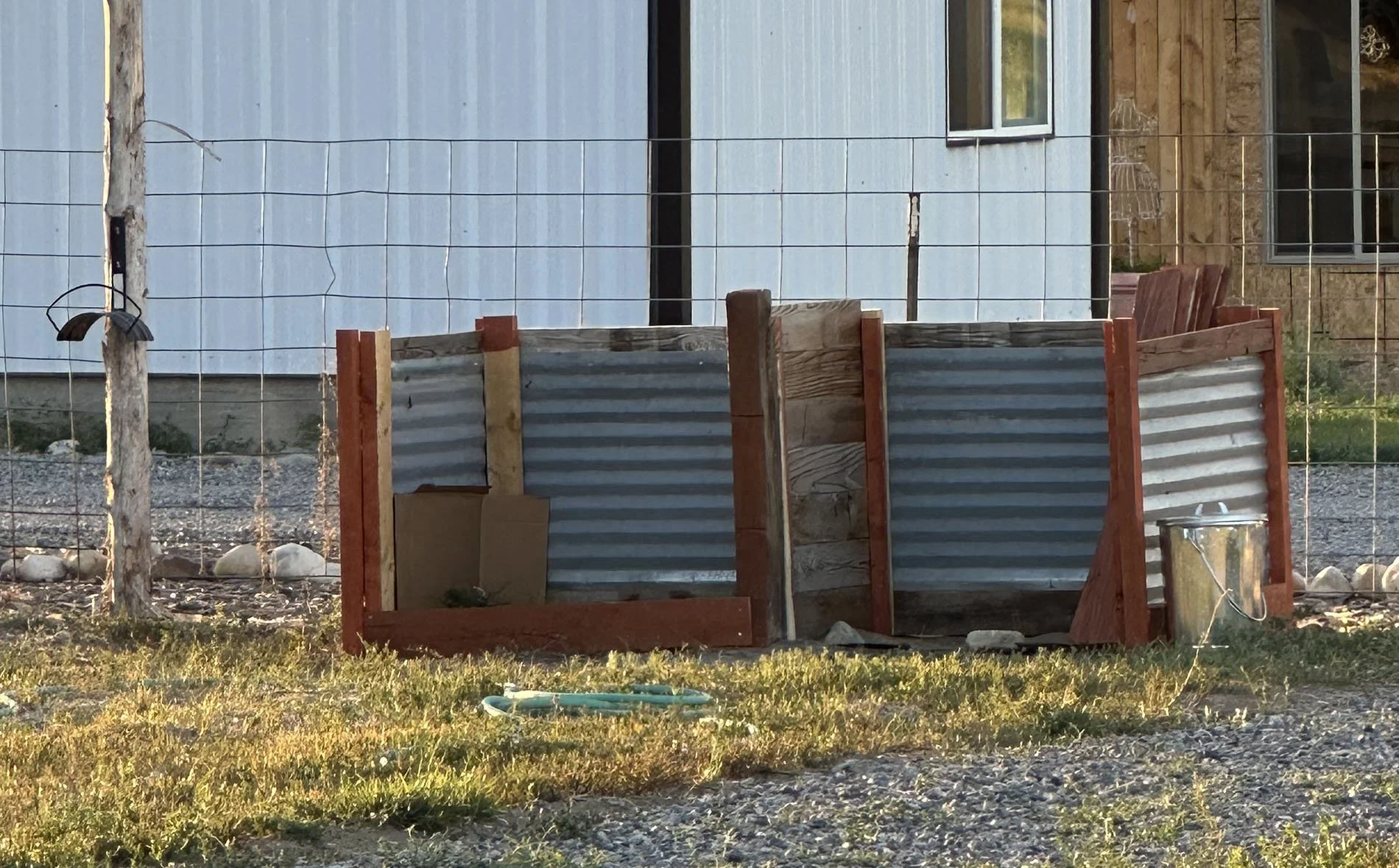
New Wood and Corrugated Metal Two Bay Compost Bin
Sadly, my first attempt at composting fell flat. Inspired by DIY projects on Instagram, I built a three-bay compost bin using recycled wooden pallets. The concept was solid; the bays however were in the wrong location. Once I figured that out, I moved them to a new location and combined the three into one large bay. That too was a mistake as I learned very quickly that it was also in the wrong location AND that it was too big for me to manage! It was too far from my water source and too large for me to turn. That said, I continued to fill it as I had to put my garden waste somewhere.
Then… something amazing happened! My cousin John came for a visit. Turns out he is a passionate gardener AND a master at composting! With his knowledge and encouragement, I decided to give the endeavor another go…. He devised a strategy for me to follow, that included having several places to collect composting material. I have a small, galvanized pail in the garden that I use to collect garden cuttings from the veggie patch and cutting garden. I have a second plastic pail I use for weeds. Eventually I can add the weeds to my compost but until I know I can get it hot enough to kill the weed seeds, I’m dumping them in the old ‘compost’ pile.
I have a second galvanized pail outside our patio door and another small ceramic container with a wooden lid by the kitchen sink. This one is more decorative, so it blends with the kitchen décor while still functioning as a place to put our compostable kitchen scraps, including coffee grounds, filters, eggshells and any cuttings from our fruits and vegetables-no meat products; however, we can also include paper napkins and towels! When this vessel gets full, I empty it in the pail outside the patio door; when that gets full, I take it to our new compost bays that my cousin and I built.
We built the new and improved Compost bin using scrap lumber from other building projects and corrugated metal from the old bin. Learning from my past mistakes, these compost bays are smaller in scale and only consists of two bins. I can always add more later if I need it. We located close to a water source in the section of the garden where our future chickens and herb garden will be. In fact, we built this compost bin next to where the chickens will live so it will be easy-peasy to transport the chicken poo from their coop to the bays! I stained the wood the same color as our new pergola, so I have visual cohesiveness throughout the garden.
Now that I have a better understanding of how composting works and a strategy to practice, it feels much more achievable and that’s a good thing. If I’ve learned anything this past year, it is what I can and can’t do. If the scale is off, as in too big, no matter how determined I might be, if I physically can’t do it, then it won’t get done. I’m learning my limitations and figuring out how to use them to devise a better game plan which will in the end lead to success with composting and actually any project I decide to take on!
